Anatomy of a Successful Exit: How a 40-Year-Old Recycling & Crushing Operation Achieved a $5,500,000 Exit on the Founder’s Terms
Every business owner eventually faces an important question: What happens to everything I've built?
For some, the answer comes through succession. For others, it comes through a carefully planned sale that preserves both the business and the legacy behind it.
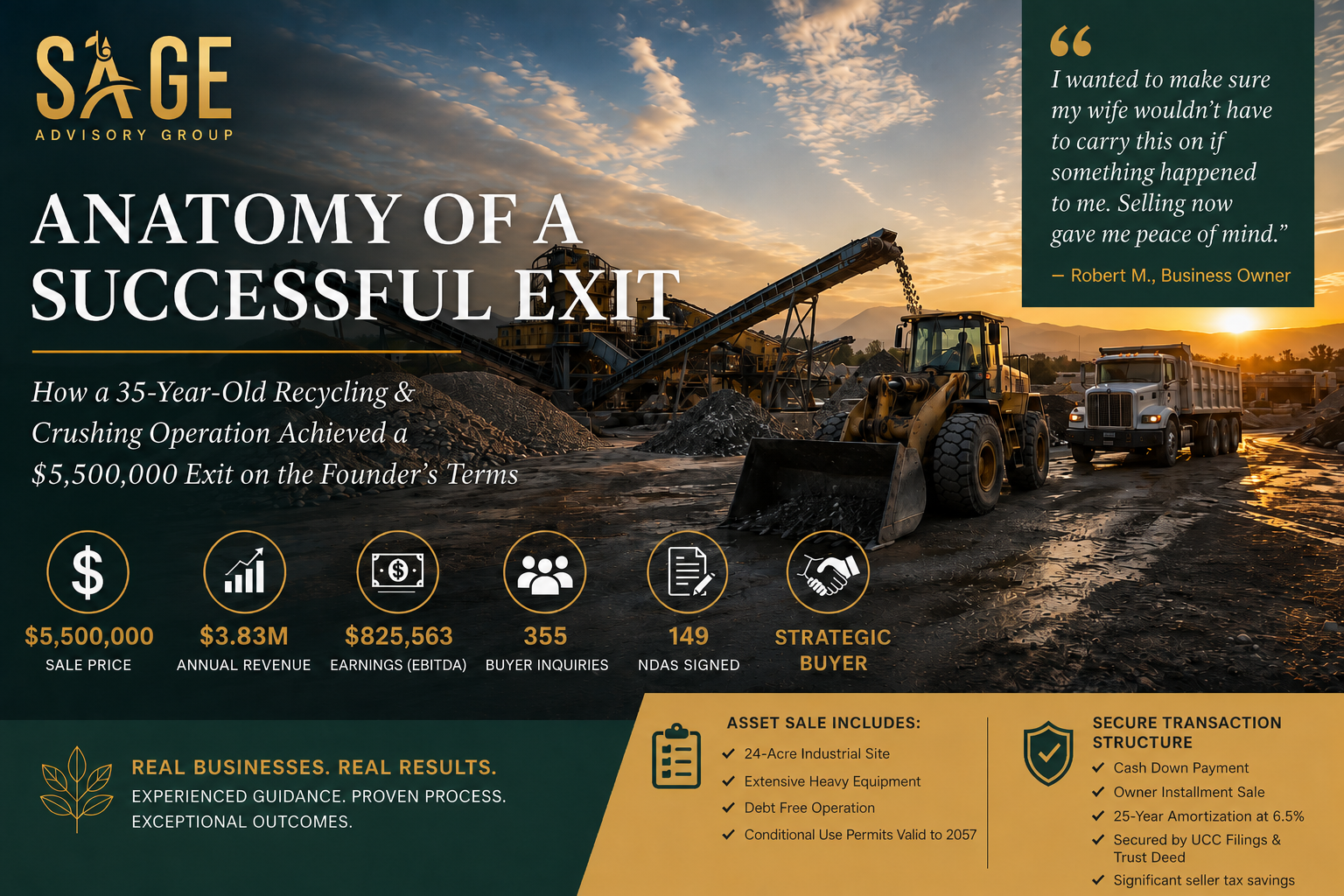
This case study demonstrates how a 40-year-old construction materials recycling and crushing operation achieved a successful exit through preparation, strategic marketing, and a transaction structure that benefited both buyer and seller. The result was a full-price sale at $5.5 million to a strategic buyer who understood the long-term value of the business.
A Business Built Over Four Decades
For forty years, the owner built more than a recycling company. He built an essential operation serving California's construction industry by transforming construction and demolition debris into Caltrans-approved road base, creating value from materials that would otherwise become waste.
The company operated from its owned 24-acre industrial site in Southern California and included extensive heavy equipment, truck scales, a scale house, repair facilities, a solar power field, water well, and specialized processing areas. Importantly, the business also held Conditional Use Permits valid through 2057, creating significant long-term operational value.
Financially, the company reflected years of disciplined management and the sale included the operational real property and extensive heavy equipment.
- Annual Revenue: $3,827,099
- EBITDA/Earnings: $825,563
- Asking Price: $5,500,000
- Final Sale Price: $5,500,000
- Earnings Multiple: 6.66x
The Motivation Was Family, Not Fatigue
Many successful exits begin with a personal decision rather than a business problem. At seventy-nine years old, the founder recognized that protecting his family required planning ahead. His primary objective was to complete a sale before health concerns could place the responsibility of operating the company on his younger wife. Unlike many owner-operated businesses, this company had already developed experienced management and long-tenured employees, allowing the owner to remain largely hands-off in daily operations. That operational maturity became an important strength throughout the sale process.
What Made the Business Valuable
Sophisticated buyers rarely purchase a business based solely on current earnings. They evaluate sustainability, competitive advantages, operational systems, and future opportunity.
This business offered several compelling attributes:
- Forty years of operating history.
- A stable workforce of eighteen experienced employees.
- Monthly W-2 payroll supporting ongoing operations.
- Mission-critical services within the construction industry.
- Valuable land and heavy industrial equipment.
- Long-term operating permits.
- Established relationships within a growing regional market.
These factors created confidence that the business could continue producing value well beyond the founder's ownership.
Every Business Has Challenges
Owners often worry that imperfections will prevent a successful sale. The reality is that every transaction involves questions that require thoughtful explanation. In this case, the industrial property was located within portions of the Alquist-Priolo Earthquake Special Studies Zone. Geological studies identified fault lines affecting limited areas of the site, meaning certain future construction would require additional mitigation or engineering review.
Rather than attempting to minimize these facts, they were fully disclosed and incorporated into the buyer's due diligence.
Transparency builds credibility.
Prepared sellers create confidence.
Confidence supports value.
Marketing to the Right Buyers
The objective was never to generate the highest number of inquiries. The objective was to source and identify the right buyer.
The marketing campaign generated:
- 355 buyer inquiries
- 149 executed Non-Disclosure Agreements
- 11 competing offers
- 177 documents organized within secure due diligence data rooms
Each stage narrowed the field to buyers who understood the complexity of industrial operations and appreciated the long-term value embedded in the business. This disciplined process allowed the owner to evaluate multiple qualified opportunities rather than negotiating from a position of urgency.
Structuring the Transaction
One of the most overlooked aspects of selling a business is that the purchase price is only part of the equation. The structure of the transaction often determines whether a sale truly meets the seller's financial goals. This transaction was intentionally designed as an asset sale with a combination of cash at closing and seller financing. The installment component was amortized over twenty-five years at 6.5% interest, creating approximately $30,000 in monthly payments strongly supported by the company's historical earnings.
The seller's position was further protected through formal security instruments, including UCC filings and a trust deed. This structure provided long-term income while also supporting the seller's personal tax planning objectives. A successful exit is not simply about closing a transaction—it is about designing one that aligns with the owner's financial priorities.
Finding the Strategic Buyer
Not every buyer would have recognized the value of this opportunity. The successful purchaser understood the significance of the company's permits, industrial infrastructure, experienced workforce, and role within the rapidly expanding Coachella Valley construction market.
The buyer saw more than equipment and real estate.
They saw an established platform positioned for continued growth.
That strategic alignment allowed the business to achieve its full asking price while positioning the operation for continued success under new ownership.
Lessons for Business Owners
Business owners often ask what creates a premium valuation.
The answer is rarely one single factor.
Successful exits are built through preparation:
- Well-organized financial records.
- Experienced employees.
- Reduced owner dependency.
- Transparent due diligence.
- Strategic positioning.
- A thoughtful transaction structure.
- Competitive buyer interest.
When these elements come together, owners place themselves in the strongest possible negotiating position.
Final Thoughts
Selling a business is one of the most significant financial decisions an owner will ever make. It deserves more than simply listing the business and waiting for offers. The strongest outcomes come from understanding what buyers value, preparing the business accordingly, and managing a confidential, competitive process that attracts qualified financial or strategic acquirers.
This transaction demonstrates that thoughtful preparation, disciplined execution, and creative deal structuring can produce outstanding results—not only in purchase price, but in achieving the seller's broader personal and financial objectives.
At Sage Advisory Group, we believe every successful exit begins long before the business goes on the market. Whether your goal is retirement, succession planning, or simply understanding your options, the decisions you make today can shape the value you realize tomorrow.
If you're considering selling your business in the next one to five years, now is the right time to begin planning. Your legacy deserves the right buyer, the right strategy, and the right outcome.
Schedule a Confidential Consultation