CASE STUDY NO. 2: Don’t Assume The Buyer of Your Business will Lease Your Owned Property
Selling Your Business While Keeping the Real Estate? Plan for what happens if the Buyer relocates the business elsewhere.
For many business owners who own both their operating business and the commercial real property it occupies, retaining and leasing back the real estate after selling the business can appear to offer an attractive exit strategy.
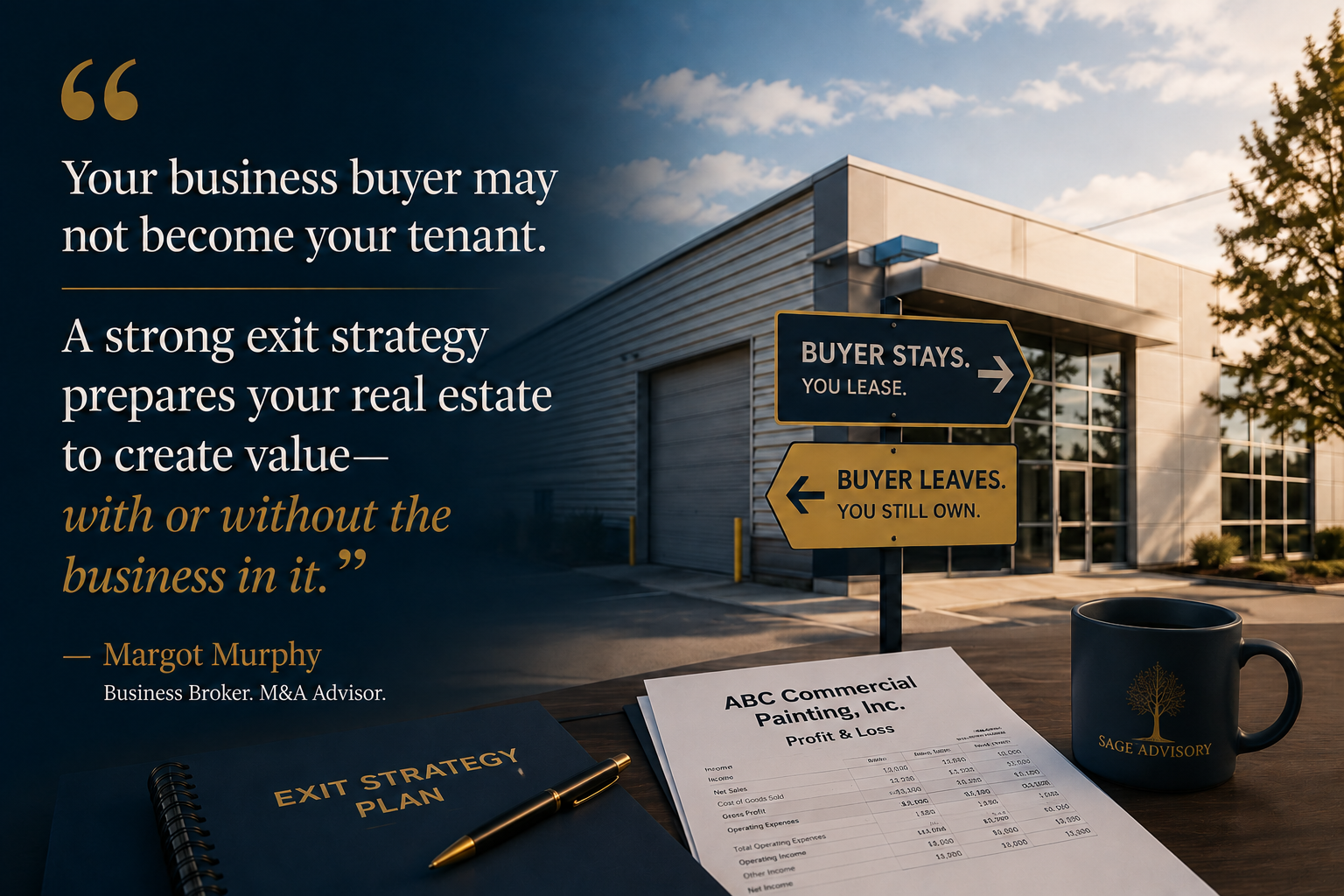
Sell the operating company. Retain ownership of the building. Lease the property to the business buyer. It sounds straightforward. But there is an important assumption hidden inside that strategy: What if the buyer wants the business—but does not want to continue occupying the current operational space?
A 40-Year-Old Commercial Painting Company
My client owned a successful commercial painting company that operated from a 6,800-square-foot commercial/light-industrial warehouse and office property, which was owned by the business seller. As part of the owner’s exit strategy, the intention was to sell the operating business while retaining ownership of the commercial real estate.
The preferred scenario was for the buyer acquiring the business to lease the existing facility back from the seller. But in certain circumstances, business buyers are scaling operations strategically and intend on combining acquired operations into an existing operational location of their own
The Critical Assumption: Your Business Buyer May Not Become Your Tenant
This possibility introduces several considerations that should be evaluated before the business is packaged and taken to market.
1. Vacancy Risk
If the business buyer does not occupy the property, there may be a period during which the building has no tenant. For an owner planning to retain the property as an income-producing asset, vacancy can affect expected cash flow and the economics of the post-business-sale real estate strategy.
2. Leasing Downtime
A replacement tenant may not be secured immediately. The property must now compete independently in the commercial leasing market. The time required to secure another tenant can influence how successfully the seller transitions from business ownership.
3. Tenant Improvement Costs
A new tenant unrelated to the former business may have different requirements for the property. Depending on the prospective tenant and the negotiated lease terms, modifications or improvements may be required before the space can accommodate a new use. Those potential costs should be considered when evaluating the economics of the owned real property.
4. Market-Rent Uncertainty
The rent envisioned between the seller and the business buyer may not necessarily be the same rent achievable from an unrelated third-party tenant. Once separated from the operating business, the property must be evaluated on its own merits in the commercial real estate lease market. This raises an additional planning question: What rent can this property realistically command if the business buyer does not stay?
Evaluate the Business and the Real Estate Separately
One of the most important lessons from this scenario is that the operating business and the commercial property are related assets—but they should not automatically be treated as having the same future. A buyer may value the company without placing the same value on occupying its existing building.
Before going to market, an owner who intends to retain the property should therefore evaluate two separate questions:
- What is the business worth to a qualified buyer?
- What is the real estate worth and how marketable is it without that business occupying it?
Questions Owners Should Ask Before Going to Market
If you own the property occupied by your business and intend to retain it after selling the company, consider these questions early:
- Is continued occupancy of the property essential to the business?
- Is the buyer expected or required to lease the property after closing?
- Could the business reasonably relocate?
- If the buyer relocates, how marketable is the building to an unrelated tenant?
- What is the current market rent for the property?
- Do historical P&Ls of the business support market rate space lease expense?
- How long might it take to secure a replacement tenant?
- Could a new tenant require improvements to the property?
- How would a period of vacancy affect the owner’s post-business sale financial plans?
“Know what your property can do for you with or without the business in it.”
—
Margot Murphy, Master Intermediary / M&A Advisor /
Commercial Real Estate Broker
For owners who have spent decades building both a company and owning valuable commercial real estate, the exit decision is rarely just about selling the business. It is also about deciding what role the real estate will play in the next chapter.
Your legacy deserves the right buyer—and a real estate strategy that works beyond the closing table.