
CASE STUDY NO.1: Could Your Lease Stop You From Selling Your Business? What Owners Often Discover Too Late
When a business operates from leased commercial real estate, the landlord may play a more important role in the sale than many business owners realize.
A buyer and seller can agree on price and terms. The buyer may be qualified and ready to move forward.
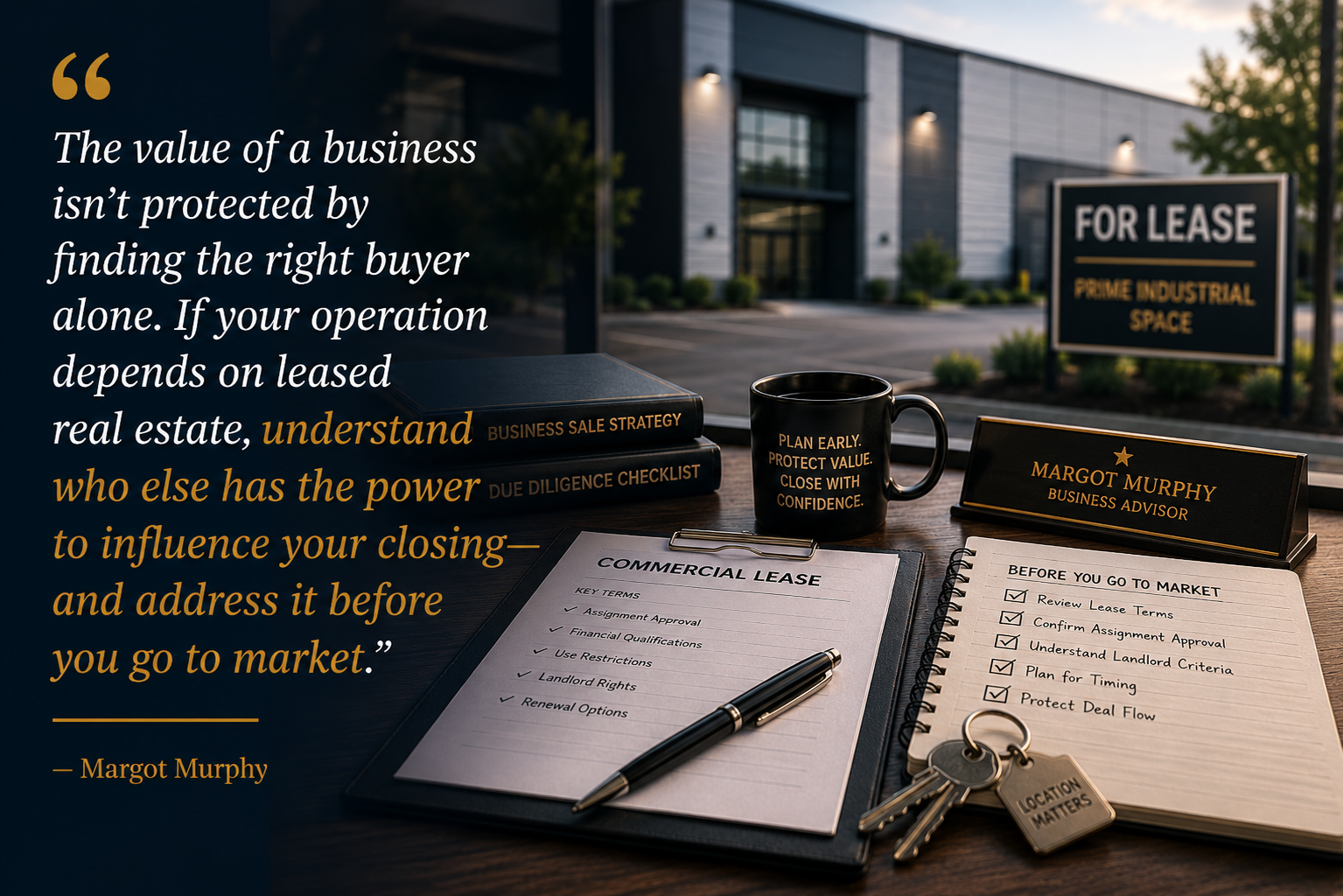
But if the continued operation of the business depends on its existing location, another important issue must be addressed:
Can the buyer successfully assume or obtain the lease?
In some transactions, the answer can directly affect the value of the business—or whether the sale closes at all.
A 40-Year-Old Business and an Important Real Estate Consideration
In this case, I represented the sale of a specialized patient medical records document retrieval operation that had been in business for approximately 40 years. The company served the insurance industry and had developed a unique, proprietary operation. Before COVID, it operated a call center with 52 employees.
The business itself was successfully sold.
However, there was an important component of the transaction that needed to be addressed: the business operated from leased office space. Both the seller and buyer agreed that retaining the existing location was the best outcome for the continued operation of the business. But that decision was not entirely theirs to make.
The Lease Was Part of the Transaction
Because the business occupied real estate under a lease, continued occupancy was subject to the terms of that lease and the landlord’s approval of an assignment or a new lease arrangement. The buyer therefore had to satisfy the property owner’s requirements before the business could confidently continue operating from the same location. This is where an often-overlooked risk can emerge in a business sale.
Property owners have varying appetites, requirements, and tolerances when considering lease assignments or new tenants. A buyer who is qualified to purchase a business does not automatically mean that the landlord will consider that buyer qualified to assume the lease.
If the landlord is unwilling to approve an assignment—or if the buyer cannot satisfy the landlord’s requirements—the consequences can extend well beyond the lease itself. The issue may affect the perceived value of the business, require the buyer to relocate the operation, complicate negotiations, or potentially derail the likelihood of a successful sale.
Why Waiting Until the Eleventh Hour Can Put a Deal at Risk
One of the most important lessons from this transaction is timing. Waiting until the final stages of a business sale to discover a landlord’s policies regarding lease assignment can unnecessarily hinder deal flow. By then, the buyer and seller may already have invested significant time in negotiations, due diligence, financing, and transaction planning.
If the existing location is important to the operation of the business, discovering late in the process that the lease cannot be assigned—or that the buyer cannot meet the landlord’s requirements—can introduce a major obstacle at exactly the wrong time.That is why the relationship between the business and its occupied real estate should be understood before the transaction reaches that point.
The Questions Business Owners Should Ask Early
For a business operating from leased commercial space, owners and their advisors should understand the lease well before taking the business to market.
Important questions include:
- Does the existing lease permit assignment?
- Is landlord approval required?
- What process must a prospective buyer complete?
- What financial or operational qualifications will the landlord require?
- How much time should be allowed for landlord review and approval?
- What happens if the buyer cannot assume the existing lease?
- Would relocation materially affect the value or continuity of the business?
These questions are not simply real estate questions.
They are transaction questions.
The answers can influence valuation, buyer interest, negotiations, transaction structure, timing, and ultimately the probability of closing.
The Broader Lesson for Business Owners
As commercial brokers advising business owners, we serve seller clients best when we identify the relationship between the operating business and its occupied real estate early—ideally before formal engagement and certainly before the business is brought to market.
- Is the business operating under a lease?
- Does the seller own the underlying real estate?
- Is the property essential to the operation?
- Can the business relocate without materially affecting its value?
- Does a third party have approval rights that could influence the transaction?
Understanding these relationships early allows advisors and business owners to better assess value, anticipate buyer concerns, structure the transaction, and protect deal flow.
In this case, the 40-year-old medical records retrieval operation was successfully sold, and the buyer and seller agreed that retaining the existing leased location was the preferred outcome.
The larger lesson applies to many privately held businesses:
The real estate occupied by a business is not separate from exit planning simply because the business owner does not own it. Sometimes, the lease itself becomes an important part of whether the business can successfully transfer to its next owner.
Plan Before You Sell
A successful business sale involves more than agreeing on a purchase price. The operating business, the buyer’s qualifications, financing, due diligence, transaction structure, and occupied real estate all need to work together.
For owners whose businesses operate from leased commercial property, understanding the lease relationship early can help identify potential obstacles while there is still time to address them. Because the best time to discover that your landlord could affect the sale of your business is before you have a buyer waiting to close.
Your legacy deserves the right buyer—and a transaction prepared to close.